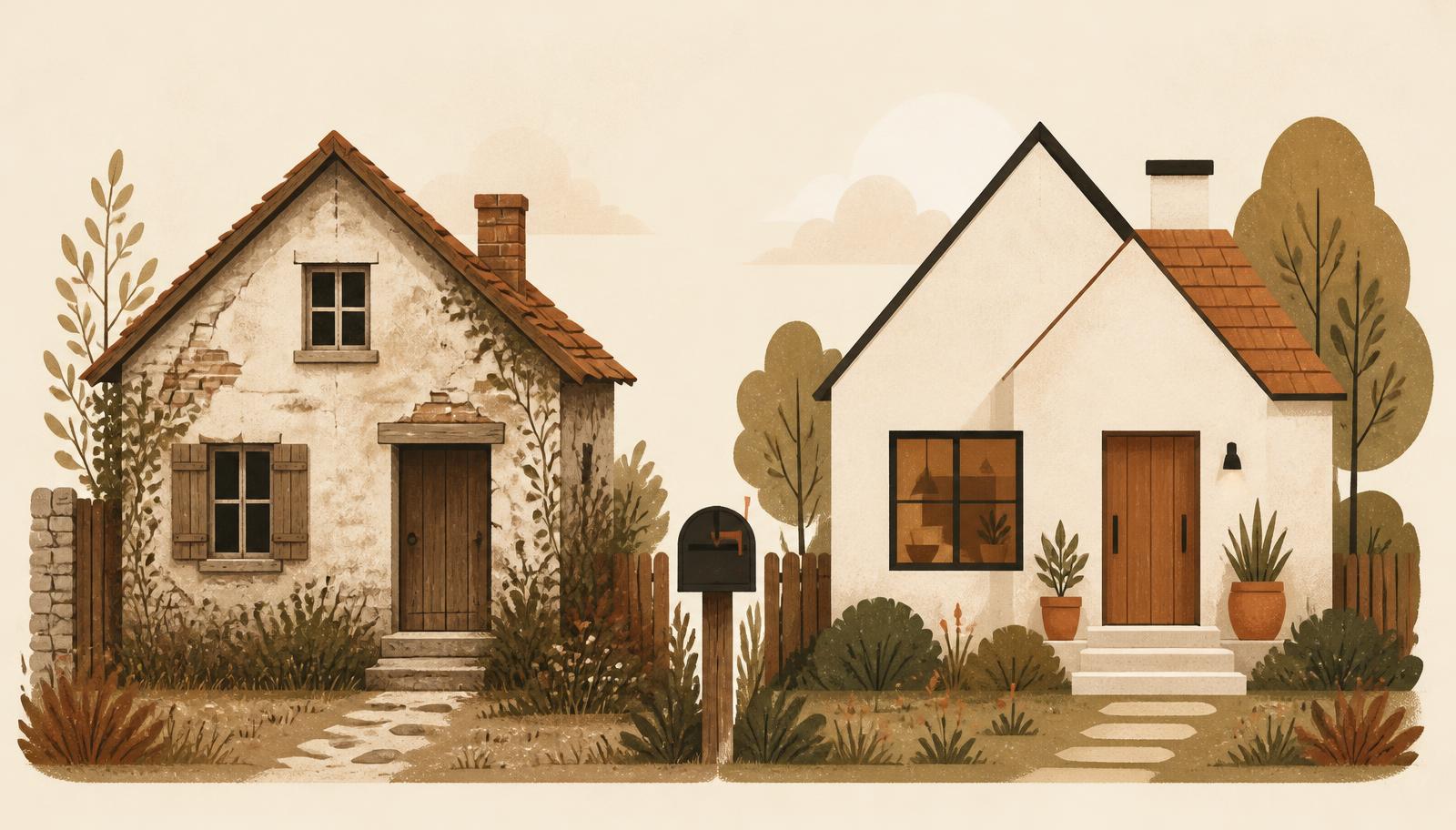
A domain is the address. A website is the house.
Almost every confusing thing about being online gets simple once you picture a street. Your domain is the number on the mailbox. Your website is the building behind it. Here it is, one picture at a time — no jargon, nothing to install.
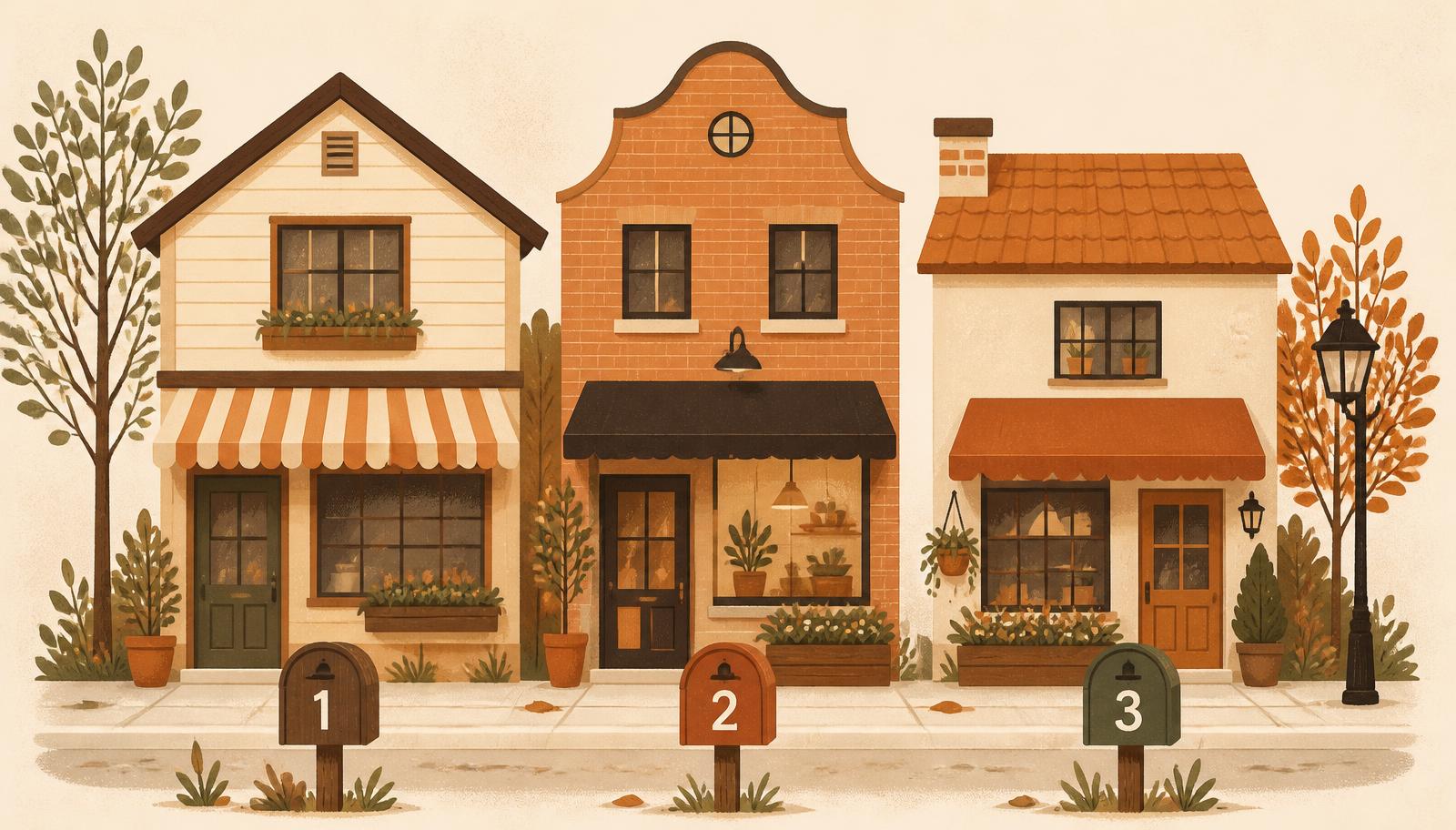
The address: your domain
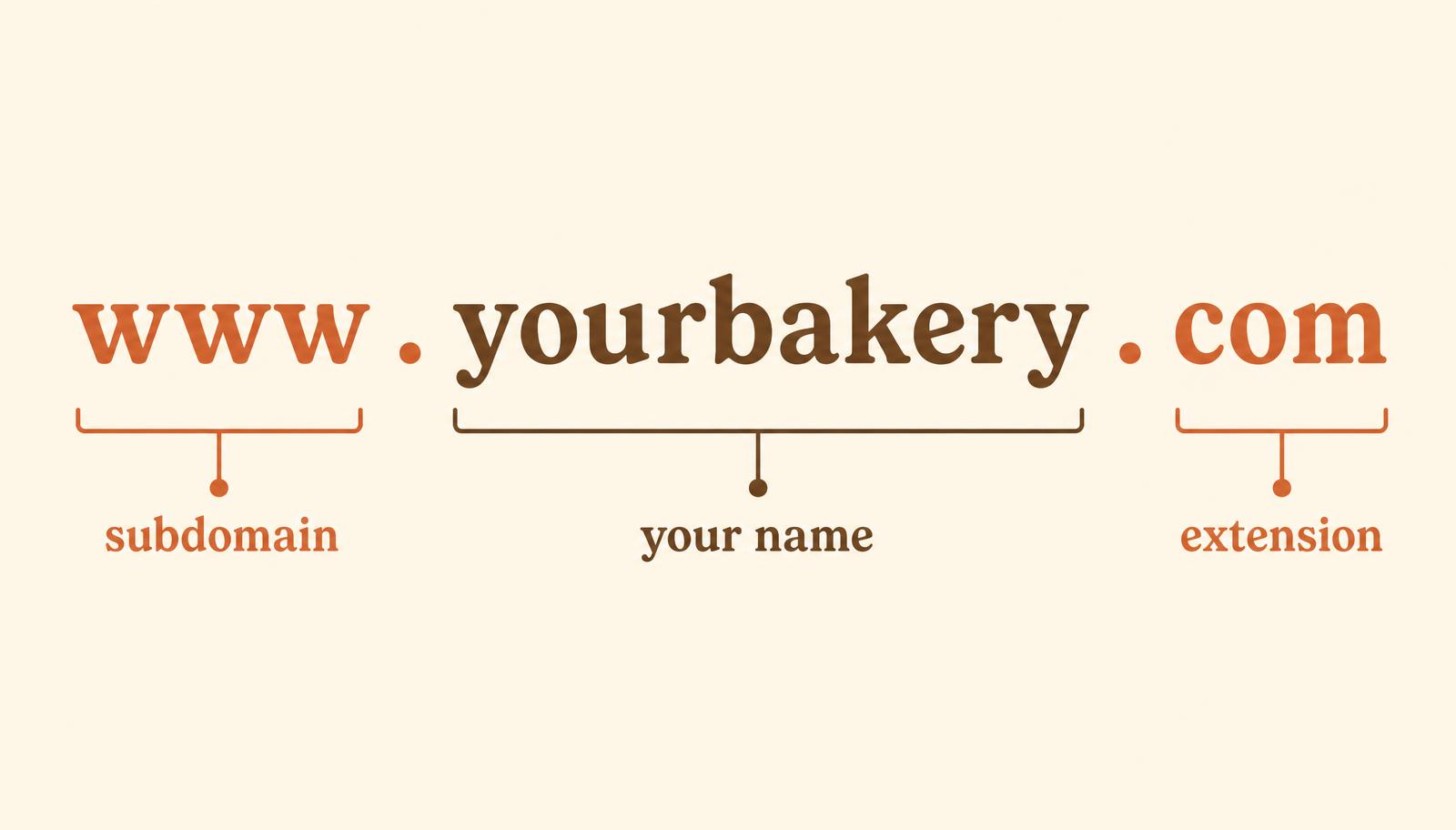
A domain name is what someone types to reach you: yourbakery.com. It does nothing on its own except point at a place. Two things are true about it, and both matter:
- It is unique. Exactly one bakery on earth can hold yourbakery.com, the same way one building holds 412 Main Street.
- It is renewed, not bought forever. You register it for a year or ten at a time. Keep renewing and it stays yours indefinitely. Let it lapse and someone else can take the address.
The address has parts, just like a mailing address has a street, a city, and a state.
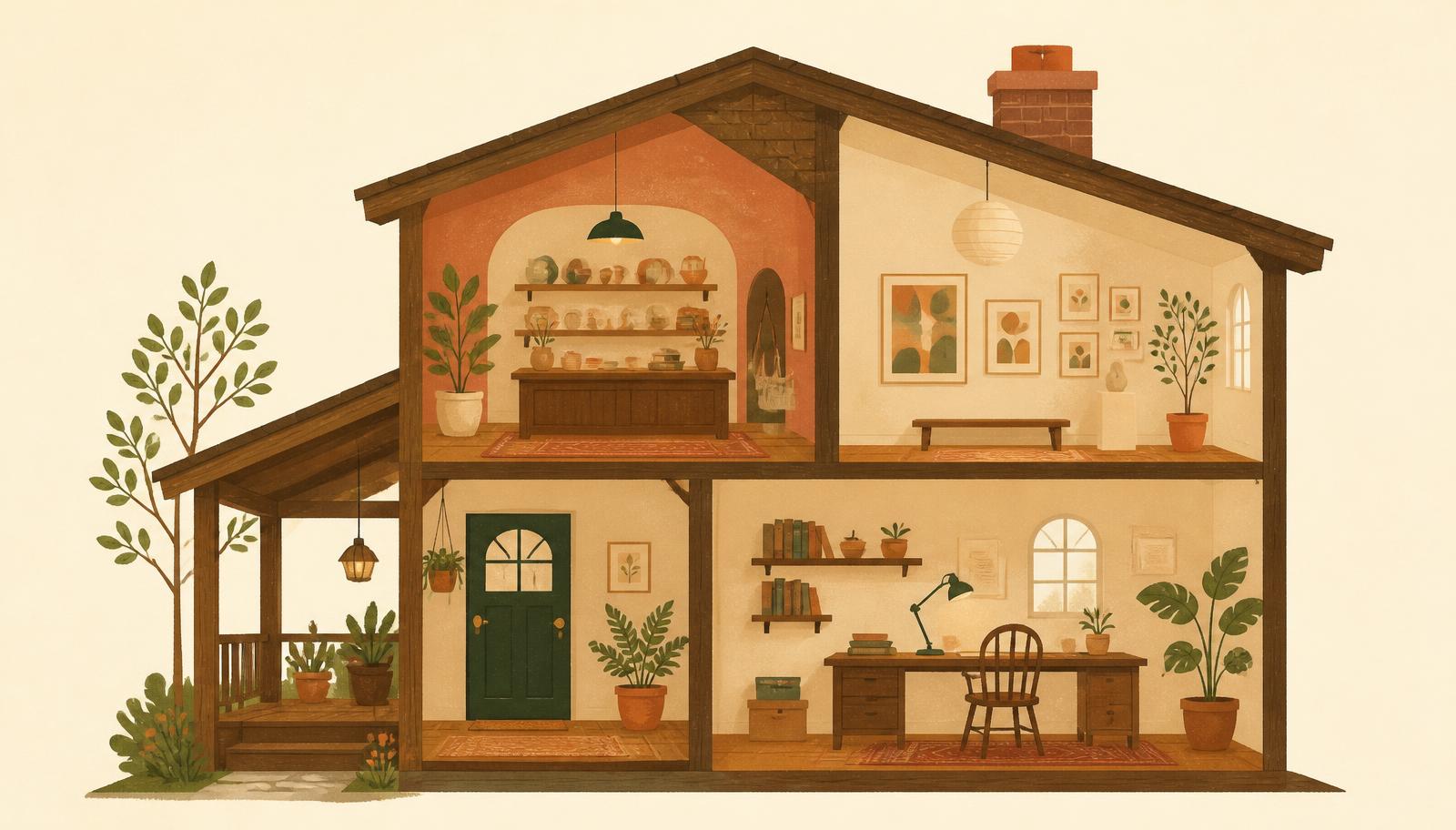
The house: your website
The website is everything a visitor actually walks through. The home page is the front porch. Your services page is the shop room. Your gallery is the wall of framed work. Your contact form is the desk where someone leaves a note.
This is the part that costs real effort, because it is the part customers judge. A great address in front of an empty room does not win any work.
You can own one without the other
This is where most people get stuck. Registering a domain does not create a website — it reserves a lot. Until something is built, anyone who types the address arrives at bare ground.
The reverse happens too: a beautiful site sitting on a free subdomain like yourbakery.somebuilder.com is a lovely house on someone else's driveway. If they change the rules, your address changes with them.

Then what is hosting?
Hosting is the land and the utilities. Your pages, photos, and text are files, and those files have to sit on a computer that stays switched on. That is hosting.
Three separate bills, three separate jobs:
The address on the mailbox. Renewed yearly.
The land and power. Keeps the house standing.
The house itself. Built once, kept up over time.
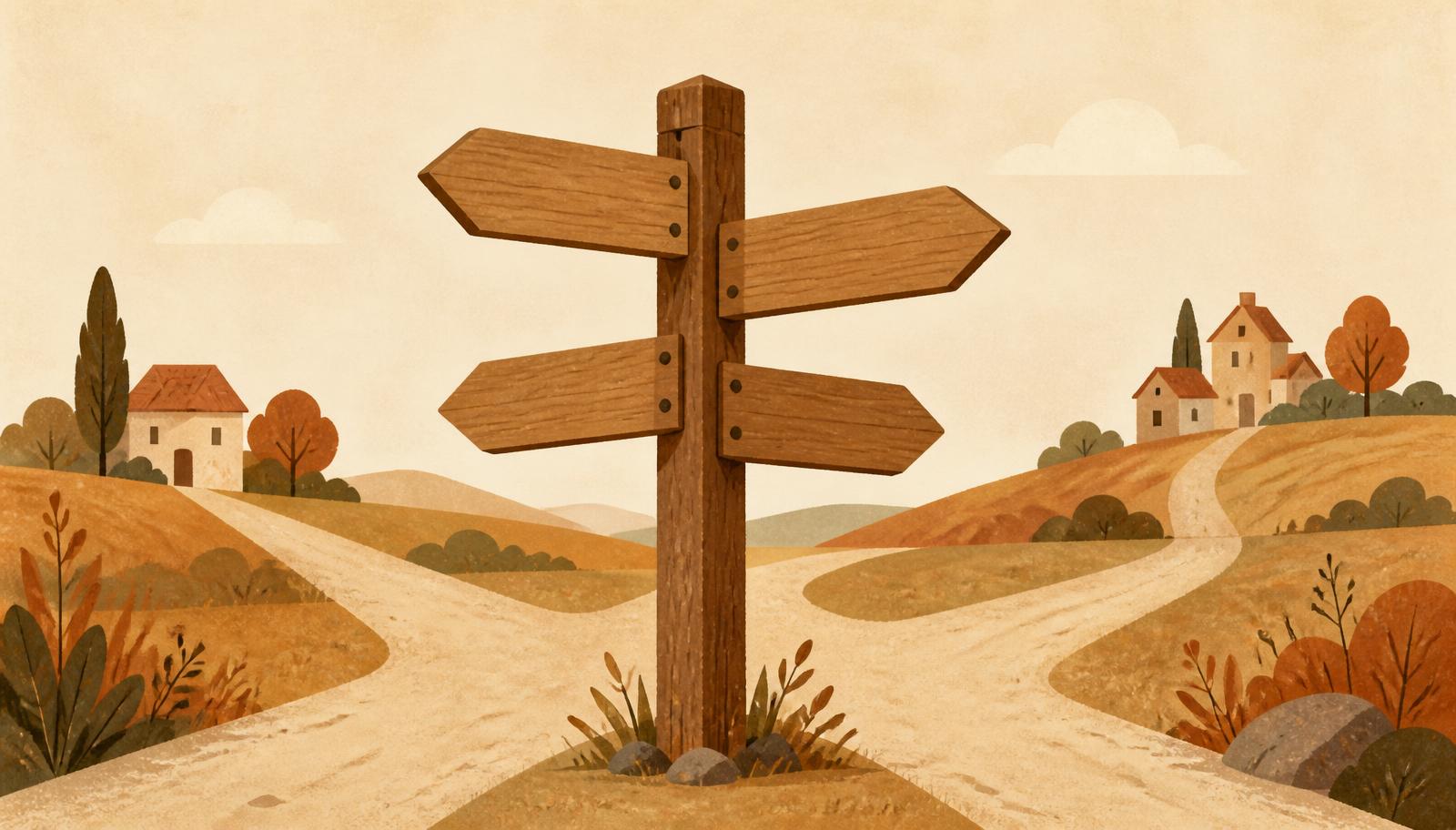
DNS is the signpost
When someone types your address, something has to tell their browser which building to walk to. That is DNS — a network of signposts that translates yourbakery.com into the location of the machine holding your files.
It is why moving hosts does not mean changing your name. You keep the address and repaint the signpost. That change takes anywhere from a few minutes to a day to spread everywhere.
Rebuilding keeps the address
An outdated site is a tired house on a perfectly good lot. You do not need a new name, new cards, or a new Google listing — you need a new building at the same address.
That's exactly what our trade-in program does: same domain, same reputation, new house.
Picking an address people remember
- Say it out loud first. If you have to spell it on the phone, it's the wrong name.
- Skip hyphens and numbers. People forget them and land on a competitor.
- .com first. If it's gone, add your city or your trade before you resort to a creative misspelling.
- Match your handles. One name across your site, Instagram, and Google listing makes you look established.
Questions people actually ask
- What is the difference between a domain and a website?
- A domain is the address people type to find you, like yourbakery.com. A website is the set of pages that live at that address. The address is registered with a registry; the pages are files stored on a server. You can own one without the other.
- Do I own my domain name?
- You hold the exclusive right to use it for as long as you keep renewing it — usually one to ten years at a time. It behaves like a lease you can renew forever, and you can transfer it to another provider or another owner whenever you like.
- Can I keep my domain if I get a new website?
- Yes. Rebuilding your site is like tearing down the house and building a new one on the same lot. The address does not change, your printed cards still work, and your customers still land in the right place.
- What is hosting, in the same analogy?
- Hosting is the land and utilities. It is the space your site's files sit on and the power that keeps them switched on. If hosting stops, the address still exists but there is nothing standing on it.
- What is DNS?
- DNS is the signpost network. When someone types your domain, DNS is what tells their browser which server holds your house. Change hosting and you update the signpost, not the address.
- Does my domain affect whether Google can find me?
- A little. A short, memorable name that matches your business helps people remember and trust you. What matters far more is the house itself: the pages, the speed, the content, and your Google Business Profile.
- What are DNS records, in plain English?
- Each record is one line on the signpost. An A record points your domain at a server's numeric address. A CNAME points one name at another name. MX records send email to the right mailbox provider. TXT records hold small notes used to prove you own the domain. You rarely touch more than two or three of them.
- How long does DNS propagation take?
- Usually minutes, sometimes up to 48 hours. Networks cache the old signpost for a set time (the TTL), so your site can look live on your phone and still look old on your laptop for a while. If you know a change is coming, lower the TTL a day ahead so the switch happens faster.
- Why does my site work for me but not for someone else?
- That is almost always caching, not a broken setup. Your computer or your internet provider is still holding the old answer. Try a different network or a private window before changing anything. Give it a few hours before assuming something is wrong.
- What should I do if my DNS records break and the site goes down?
- Do not start editing records at random. First, confirm what the world currently sees using a DNS checker so you know whether the problem is your records or your hosting. Second, compare each record against the exact values your host gave you, watching for a missing trailing dot, a stray space, or a duplicate record fighting the correct one. Third, remove duplicates rather than adding more. If email stopped too, your MX records were likely overwritten, and those must be restored from your email provider's instructions.
- Can I lose my domain by breaking DNS?
- No. DNS is the signpost, not the deed. Your registration stays yours until it expires, so a bad record is always reversible. Keep auto-renew on and keep the registrar's contact email current, because expiry is the one mistake that is genuinely hard to undo.
Check yourself
Five questions, no signup
Answer all five, then see how the analogy holds up.
Take the guide with you
The same illustrations, the key takeaways from each part, a one-page recap, and the FAQ — in a printable PDF you can hand to a partner or keep on your phone.
Want us to handle all three?
We register the domain, set up the hosting, build the site, and point the signposts. You own the address outright — there's no separate account for you to babysit.